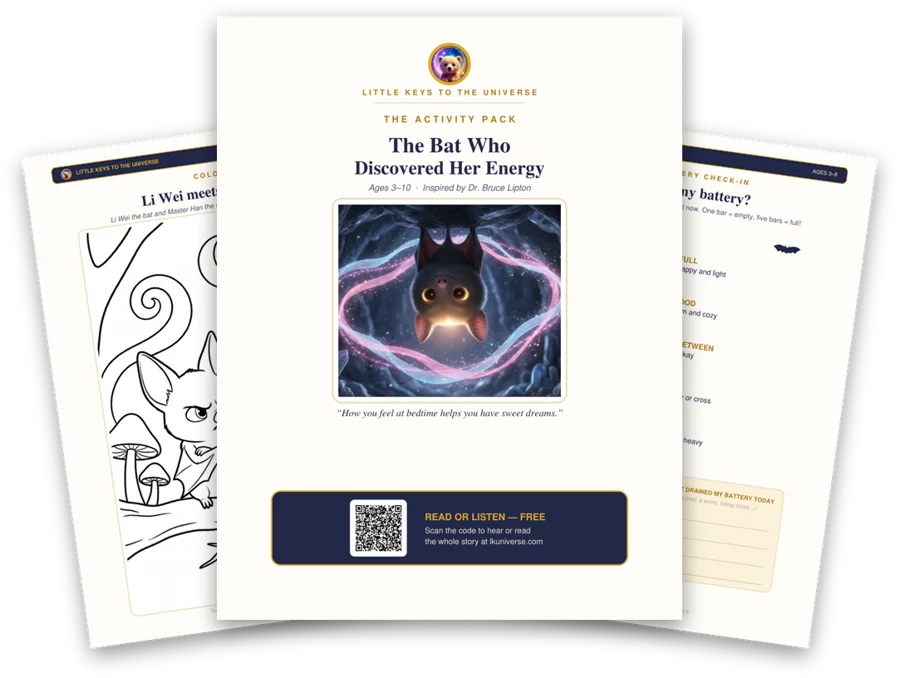
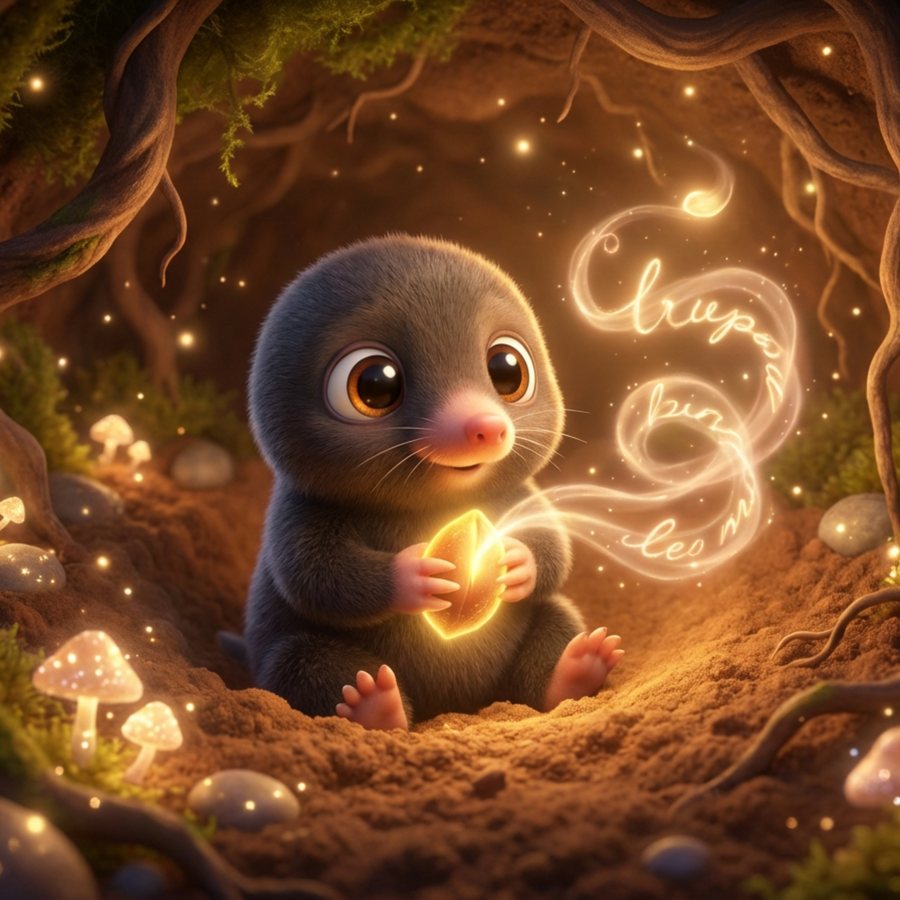
The cavern lay hidden deep in the mountains, its entrance barely noticeable behind a veil of ivy. The walls shimmered faintly with light, like a soft glow from somewhere deep inside. Inside, the cavern was filled with glowing stones and crystals of all sizes. But these were not just any stones—they were sensitive to emotions. They glowed brighter or dimmed depending on the energy around them. Some creatures had long learned to live by this energy, but many were skeptical.
Li Wei, a curious young bat, had heard stories of the glowing cavern but never believed it could be true. She had always thought it was just superstition, “woo-woo,” as some of the older animals called it. “Crystals can’t really change anything,” she would think. “It’s just the light hitting them the right way.”
But tonight, something was different. The wind was still, and the air felt thick with something she couldn’t quite explain. Her curiosity got the better of her, and she flew toward the cavern.
As Li Wei entered the cavern, she was greeted by a soft, ethereal glow. She was not alone. Perched on a high stone was Master Han, a wise owl who had spent years studying the energy that flowed through the cavern and the balance of emotions that affected it.
“Hello, Li Wei,” Master Han said in his calm, measured voice. “I see you’ve come to see the cavern for yourself.”
Li Wei tilted her head. “I’ve heard the stories, but I’m not sure I believe it. How can emotions really make these crystals glow? It sounds… well, a bit far-fetched.”
Master Han smiled knowingly. “I understand your skepticism. Many creatures think like you. But there is truth to what you’ve heard. Our feelings do create energy, and that energy has the power to influence everything around us.”
Li Wei looked at the crystals in the cavern. Some were glowing brightly, while others were dim. She didn’t feel any different, but she was curious. “So, if I’m feeling happy, the crystals glow brighter?” she asked skeptically.
“Exactly,” Master Han replied, “but not only happiness. Every emotion has a frequency, a vibration. Fear, anger, joy, love—all of them are energy, and when we allow them to flow through us in a mindful way, they influence the world around us.”
Li Wei frowned. “I still don’t get it. How does something I feel inside really affect these crystals?”
Master Han flew down and perched beside her. “Let me show you.” He gestured to a crystal that was glowing faintly. “This crystal is dim because the energy around it is not flowing freely. It is blocked by uncertainty and fear. Now, let’s try something. Close your eyes, and think of a happy memory. Something that makes you smile.”
Li Wei closed her eyes and thought of flying high above the mountain, feeling the wind under her wings, soaring freely. She smiled at the thought.
“Now, breathe deeply,” Master Han guided her. “Inhale the joy of that memory, and as you exhale, let that joy spread through your body.”
Li Wei did as he said. As she focused on the joy in her memory, she felt a warm sensation in her chest. She opened her eyes, and to her surprise, the crystal in front of her had started to glow brighter, casting a soft light on the cavern walls.
“That’s it?” Li Wei gasped. “But I didn’t touch it. All I did was think about something happy, and it changed?”
“Yes,” Master Han said. “It’s all about focus and awareness. When you focus on positive feelings, you create energy that can influence everything around you. But if you focus on fear, worry, or anger, you block the flow of that energy, just like a dam in a river.”
Li Wei stood there for a moment, absorbing the lesson. “So, it’s true. The way we feel can change the world around us.”
Master Han nodded. “Yes. The energy you create with your thoughts and emotions is real. Just like a vibration can make a bell ring, your emotions vibrate and influence everything you encounter.”
Li Wei thought for a moment. “But what about negative feelings? What happens when I feel bad? Can I fix it like that?”
“Good question,” Master Han replied. “Negative feelings, like sadness or frustration, are natural, but they can create energy that’s difficult to manage. But with mindfulness and understanding, you can help those emotions pass, just like the wind clears the air after a storm. If you learn to focus on your breath and your feelings, you can change the energy around you, even when it feels heavy.”
Li Wei felt a sense of calm she hadn’t experienced before. She realized that her emotions, even when negative, didn’t have to control her. She had the power to choose how she responded to them, and how she could allow them to flow through her in a mindful way.
“And so, Li Wei discovered that her feelings were not just invisible things—they were powerful forces that shaped her world. The crystals in the cavern taught her that mindfulness could help her focus her energy, and with that understanding, she could brighten her world, just like the crystals that glowed with her joy.”