But what if the world isn’t happening to him? What if he’s creating it—without even realizing it?
This story is inspired by Neville Goddard, a wise teacher who showed us that what we feel deep inside shapes the world we wake up to. Let’s step inside Puddle’s pond and discover the magic of emotions, imagination, and the power that was inside him all along…
As the stars twinkle above and the night settles in, let’s begin.
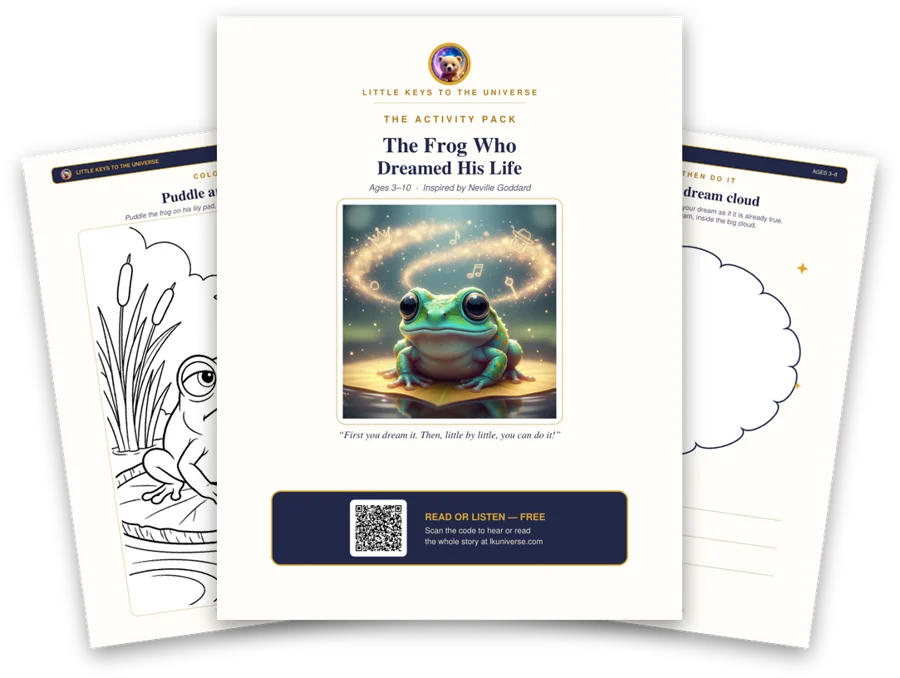
Puddle sat on his usual, half-soggy, half-shady lily pad, watching the other frogs leap and play.
Boing! Boing!
They jumped so high their bellies caught the sunlight. They landed perfectly on big, golden lily pads, wide and sturdy, while Puddle’s little pad wobbled beneath him like a floating teacup.
His stomach grumbled. Catching bugs had been impossible today. The juiciest ones always seemed to land near Bouncer, the biggest, fastest frog in the pond. Puddle sighed, staring at his reflection in the water.
"Why does everything feel so hard for me?" he croaked.
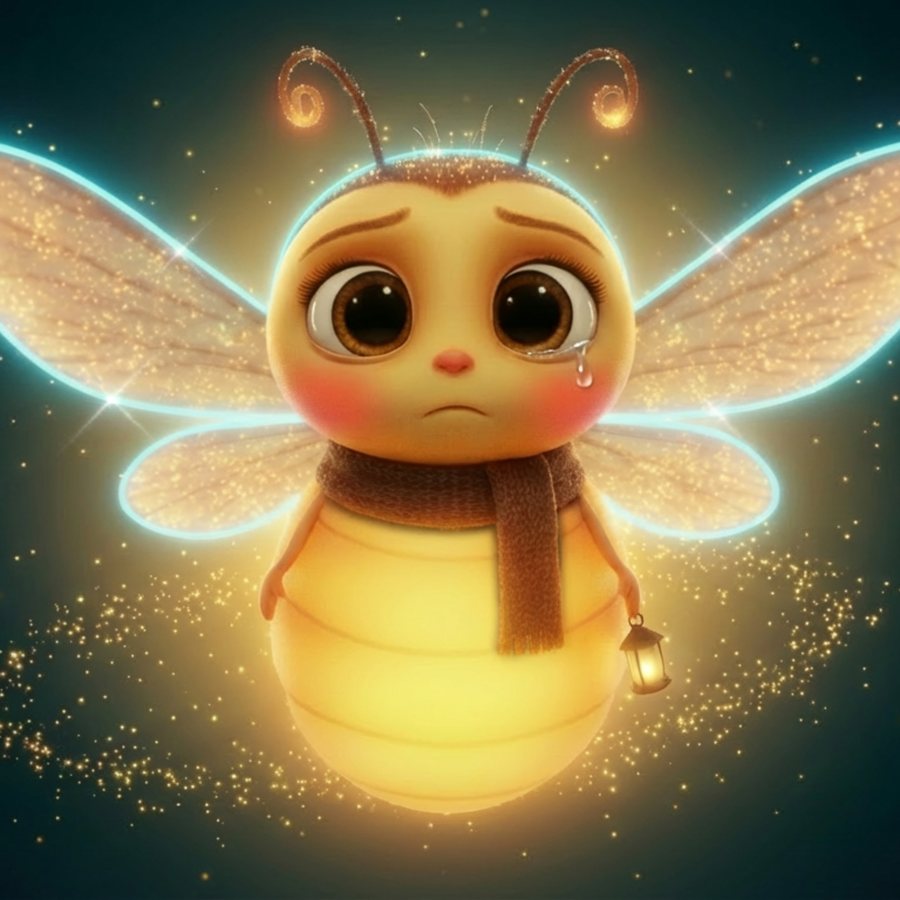
Just then, a tiny golden light flickered beside him. A firefly.
"Thinking like that won’t help, you know," the firefly said, hovering above Puddle’s nose.
Puddle blinked. "And who are you?"
"Name’s Lumen. And I know something that can change everything for you."
Puddle rolled his eyes. "Unless you can give me Bouncer’s legs, the best lily pad, and a belly full of food, I don’t think so."
Lumen just twinkled, like a little star in the air. "You don’t need new legs. You need a new feeling. What you feel before you sleep shapes the world you wake up to."
Puddle frowned. "What does that mean?"
Lumen landed on a reed beside him. "Tonight, before you sleep, don’t wish for things. Feel them. Feel what it’s like to have the biggest lily pad, to leap as high as the sun, to have food land right in front of you. Not as a dream, but as if it’s already true."
Puddle snorted. "That sounds silly. I’ll wake up in the same old pond."
"Try it," Lumen said. "Feel it deeply, just before you fall asleep. The pond will show you what happens next."
Then, just like that, the little firefly zipped away into the night.
That night, Puddle curled up on his soggy, wobbly lily pad, staring at the stars. He still thought Lumen’s idea was nonsense, but as his eyes grew heavy, he decided to try.
He imagined the feeling of stretching out on a warm, golden lily pad—the biggest one in the pond. He imagined the feeling of soaring through the air, his legs pushing him higher than ever before. He imagined the feeling of catching a big, delicious bug without even trying.
At first, it felt fake, like playing pretend.
But as he let himself sink into the feeling, something strange happened. His body felt lighter. His lily pad felt steadier. His heart wasn’t grumbling—it was full.
And with that, Puddle drifted into sleep.
The next morning, the sunlight felt… different.
Puddle stretched and—wait! His lily pad wasn’t soggy anymore! It was big and golden, just like he imagined. He sat up, confused.
Just then, a fat, juicy bug flew right in front of his face. Without thinking, he snapped it up.
"Whoa…"
Something in him felt different. Stronger. Bigger. When he crouched to leap, his legs pushed harder than ever before.
He launched into the air—higher than he had ever jumped!
SPLASH! He landed in the water, laughing.
Nearby, Bouncer watched, surprised. “Where did that come from?”
Puddle wasn’t sure. But deep down, he knew.
For the next few days, life felt easy. Bugs seemed to land near him without him even trying. He leaped higher. His lily pad stayed warm and steady.
But then… a storm rolled in.
The wind shook the pond. The rain pounded the water. And Puddle, shivering, started thinking…
"Maybe it was all just luck."
"Maybe I was never really different."
"Maybe I’ll wake up tomorrow and everything will be back to normal."
That night, instead of feeling strong, he felt small again. Instead of imagining success, he imagined struggle.
And when he woke up…
His lily pad was soggy again. The water was cold. The bugs seemed far away.
Puddle’s heart sank. "It was all just a trick," he whispered.
Then, a tiny light flickered beside him.
"You’re doing it again," Lumen said.
Puddle frowned. "Doing what?"
"Letting doubt decide your world. You woke up in what you imagined last night. Now, what will you imagine tonight?"
Puddle sat there, thinking.
Lumen was right. It hadn’t been luck. It had been him, all along.
Puddle never saw himself the same way again.
He still had days where the pond felt stormy, where doubt whispered in his ear, where things didn’t go his way.
But now, he knew a secret: The way he felt inside shaped the world outside.
Instead of waiting for things to change, he changed his feelings first.
Instead of wishing for something better, he felt it as if it were already true.
Instead of letting bad days decide his future, he decided for himself—every night, before sleep.
And every morning, he woke up to a world that reflected what was inside him.
And guess what? You can do the same.
Tonight, before you close your eyes, try this:
Think of something you really want. Not as a wish, but as if it’s already real.
Feel it deep inside—what would it be like if it were already true?
Imagine waking up tomorrow and seeing it in your world.
Hold onto that feeling as you drift into sleep.
Your emotions are like ripples in the water—what you send out comes back to you.
This is one of the most powerful things you can learn while you’re still young.
The world around you isn’t just happening—you are creating it.
So… what kind of world will you wake up to tomorrow?
That’s up to you.
Sweet dreams.